
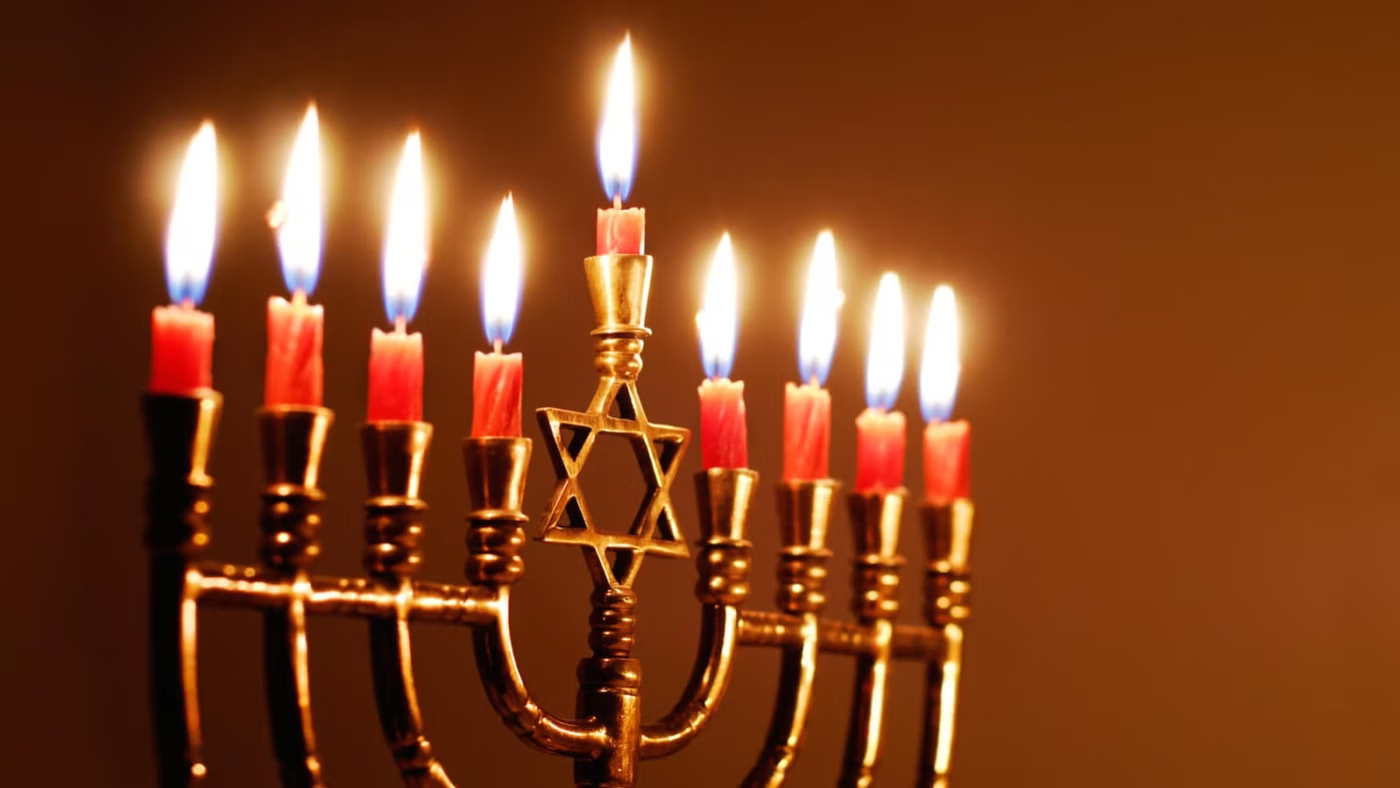
On the first night of Hanukkah this year, as Jews gathered to kindle lights on Bondi Beach in Sydney, gunmen opened fire and turned a public celebration of Jewish joy into a scene of terror and bloodshed. The attack, which Australia’s prime minister condemned as antisemitic terrorism, is only one brutal example of a much broader reality: antisemitic incidents have surged dramatically worldwide over the past two years, reaching levels not seen in generations and reminding Jewish communities everywhere that even the most ordinary public expressions of Judaism can be met with hatred and violence.
Hanukkah offers a powerful counter-narrative to the way winter holidays are sold in American culture, and that narrative is urgently needed in a time of rising antisemitism. In her book “People Love Dead Jews: Reports from a Haunted Present”, Dara Horn contrasts what she calls “Purim antisemitism,” in which antisemites do not want Jews in society at all (the Nazis and the Holocaust is a modern example), with “Hanukkah antisemitism,” in which Jews are welcomed only on the condition that they assimilate and mute or privatize their Jewishness (Horn’s example is that of a Jewish employee at the Ann Frank House in Amsterdam who was initially forbidden to wear a kippah at work and told to cover it with a hat, even while guiding visitors through a museum dedicated to a murdered Jewish girl in hiding). In many places today, Jews are told—explicitly or subtly—that we are welcome as long as we leave most of our Judaism at home, or keep it invisible; Hanukkah insists that Jewish light belongs in the public square, unapologetically shining as itself.
Hanukkah and Christmas may sit next to each other on the calendar and share winter lights, but they tell radically different stories and emerge from different theological worlds. Christmas centers on the incarnation of Jesus, a belief not shared or celebrated in Judaism; Hanukkah emerges from a Jewish struggle to remain distinct from surrounding Hellenistic culture and to rededicate sacred space and practice to God. Calling Hanukkah the “Jewish Christmas” erases Jewish particularity and quietly suggests that Judaism is authentic only when it mirrors the majority faith.
At its core, Hanukkah is about Jews who refused to let their covenantal identity be swallowed by a dominant culture that promised sophistication and success in exchange for sameness. The Maccabees did not go to war so that Judea could have a more inclusive winter shopping season; they fought to preserve Shabbat, Brit Milah, Torah learning, and the right to live differently. The rededication of the Temple and the small cruse of oil become symbols of a stubborn, vulnerable holiness that insists on shining even when it seems impractical or uneconomical.
In contemporary America, Hanukkah has often been inflated as a gift-heavy children’s holiday largely because it shares the month with Christmas and its massive commercial machinery. Presents, “Hanukkah bushes,” blue‑and‑white wrapping paper, and sales that treat menorahs as seasonal décor can leave the impression that the holiday’s primary purpose is to keep Jewish kids from feeling left out. When the marketplace becomes the primary teacher, the story of resistance to assimilation gets flattened into a story of “we have a fun December holiday too.”
To reclaim Hanukkah is to let its original tension speak to our lives now: how does a minority faith remain joyful, open, and engaged with the world without dissolving into it? The lights ask hard questions about which values are non-negotiable, which practices we refuse to sell out on, and where we quietly bow to the pressures of success, convenience, or belonging. Each candle can be framed not as a backdrop to eight nights of presents but as an invitation to notice somewhere in our lives where a small, fragile commitment to holiness is still burning and deserves to be protected.
Reclaiming the holiday does not require rejecting all gifts or joy, but rather re-centering the celebration. Families might decide that if there are presents, they are small and secondary to nightly rituals of singing, learning, and tzedakah: telling the story, adding a teaching about civil courage or religious freedom, or designating a night for giving rather than receiving. Communities can shape Hanukkah gatherings around public rituals, justice work, and spiritual courage rather than competing with Christmas pageantry—showing that the most faithful way to honor Hanukkah is not to make it bigger but to let it be more truly itself.


Important ideas. Thanks for taking the time to keep us centered and focused on Hanukkah